Serving Renton, Seattle
the East Side & Beyond!
the East Side & Beyond!

Living in the Pacific Northwest means we are no strangers to the rhythmic patter of rain on our roofs. However, when a standard drizzle turns into a prolonged Seattle downpour, the stress on your home infrastructure increases significantly. The influx of stormwater does more than just soak your lawn; it puts immense pressure on your drainage systems, sewer lines, and foundation. Without proper preparation, a rainy day can quickly escalate into a residential plumbing crisis.
In this guide, The Plumbing Joint explores the critical connection between heavy rainfall and common household plumbing failures. We want to provide Seattle homeowners with the knowledge they need to spot vulnerabilities before they become costly repairs. Understanding how our unique local climate interacts with your pipes is the first step in keeping your basement dry and your drains flowing throughout the wet season.
Many homeowners believe that because their pipes are underground, they are shielded from the weather. In reality, the soil in Seattle acts as a massive sponge, expanding and shifting as it absorbs water. When the ground becomes saturated, it exerts “hydrostatic pressure” against your buried sewer and water lines. If a pipe already has a small crack or a weakened joint, this external pressure can cause the pipe to collapse or allow mud and rocks to enter the line, causing a massive backup.
Seattle also features many older neighborhoods with combined sewer systems. These systems are designed to carry both sewage and stormwater in a single pipe. During a heavy storm, these pipes can reach maximum capacity. When the city’s main line is overwhelmed, the excess water has nowhere to go but back up through the lowest drains in your home. This is why you might notice your basement floor drain “gurgling” or backing up during a particularly intense rainstorm.
Ground shifting is another silent threat. As the steep hills and varied terrain of the Seattle area absorb water, the earth can move just enough to pull at your plumbing connections. This movement can shear off a pipe at the foundation wall or cause a “belly” in the line where waste can settle and harden. Monitoring your drains for sudden changes in speed after a storm is vital for catching these structural shifts early.
If your home has a basement or a crawlspace, your sump pump is likely the most important piece of equipment you own during a Seattle winter. Its job is to collect water that accumulates in a “sump pit” and pump it safely away from your foundation. However, because these pumps often sit idle during our drier months, they can fail precisely when they are needed most.
A common emergency we see involves the “float switch.” If debris or mineral deposits build up in the pit, the switch can become stuck, preventing the pump from turning on as the water rises. We recommend testing your pump before the heavy rain hits by pouring a five-gallon bucket of water into the pit to ensure it activates and drains quickly.
Furthermore, an electric-only sump pump is a vulnerability. Seattle storms frequently cause power outages. Without a battery backup system, your pump will stop working just as the rain is at its heaviest. Investing in a secondary power source or a water-powered backup pump can be the difference between a dry basement and thousands of dollars in water damage. Do not forget to inspect the discharge line outside your home as well; if the exit pipe is clogged with wet leaves or sand, the pump will burn out trying to push water against a blockage.
When a Seattle storm hits its peak, the sheer volume of water entering the municipal system can be staggering. For homeowners, the most distressing result of this is a main sewer line backup. Unlike a simple clog in a kitchen sink, a main line backup occurs when wastewater from the entire house is unable to exit. If you notice that flushing a toilet causes water to bubble up in your shower or bathtub, you are likely facing a sewer emergency triggered by rain.
The influx of rainwater often enters the sewer system through illegal connections or cracked pipes, a process known as inflow and infiltration. This extra water can push the contents of the sewer line back toward your home. If your home is situated at a lower elevation than the street, you are at a higher risk. This is where a backwater valve becomes essential. This device acts like a one-way flap, allowing waste to leave your home but preventing the city’s rising stormwater from flowing back into your basement.
If you experience a backup during a storm, it is important to stop using all water immediately. Every gallon you send down a drain will only add to the flooding in your home. Professional hydro jetting is often the best solution after the rain subsides, as it uses high-pressure water to clear out any silt, sand, or sludge that the storm washed into your pipes.
Many plumbing emergencies actually start at the roofline. Your gutters and downspouts are designed to move hundreds of gallons of water away from your home’s foundation. In the Pacific Northwest, our heavy tree canopy means gutters are frequently filled with pine needles and moss. When these lines clog, water overflows and pours directly down the side of your house, pooling at the base of your foundation.
This concentrated water can seep into your crawlspace or basement, overwhelming your interior drainage. If your downspouts are connected to underground “tight lines,” a blockage deep in the pipe can cause water to back up and leak through your foundation walls. Keeping these perimeter drains clear is a plumbing priority that often goes overlooked until a flood occurs.
We recommend extending your downspout exits at least 5 to 10 feet from the house. For homes on sloped lots, common in many Seattle neighborhoods, a French drain system may be necessary to redirect groundwater. If you notice soggy patches in your yard that never seem to dry out, your underground drainage pipes may have collapsed or become filled with roots, which requires a professional camera inspection to locate and repair.
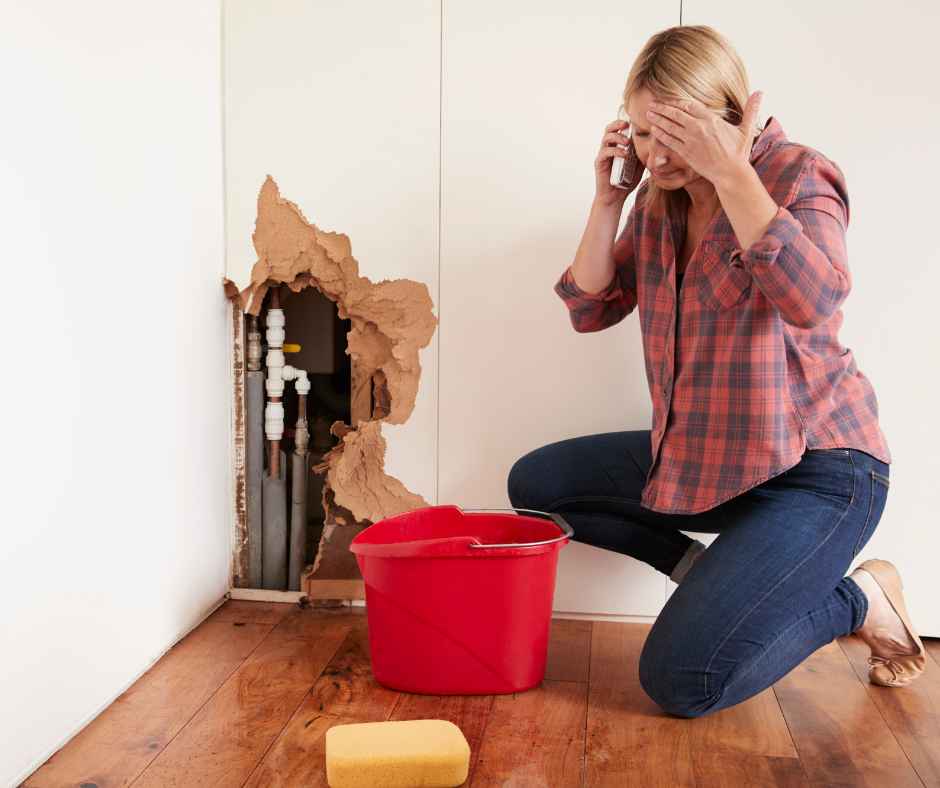
Discovering standing water in your home is stressful, but taking the right steps in the first 30 minutes can significantly reduce the total damage. Safety should always be your first priority. If water has reached the level of electrical outlets or is dripping near light fixtures, do not enter the area. Turn off the power to those circuits at the main breaker box if it is safe to do so.
Once you have ensured your safety, the next step is to stop the water flow, if possible. If the issue is a burst pipe, locate your main water shut-off valve and turn it clockwise until it stops. For sewer backups caused by rain, the best thing you can do is stop running any water in the house, including the dishwasher and washing machine.
Take photos and videos of the situation for insurance purposes. This documentation is vital for claims involving “sump pump failure” or “sewer backup” coverage, which are often separate riders on your homeowner’s insurance policy. Finally, clear a path for the plumbing team so they can access your utility room, crawlspace, or main cleanout immediately upon arrival. Rapid access lets us get your home back to a dry, safe state more quickly.
Seattle’s rainy season is a true test for any residential plumbing system. From the pressure of saturated soil to the demands placed on sump pumps and sewer lines, your pipes work harder during the winter than at any other time of year. By understanding these risks and performing basic maintenance, such as gutter cleaning and sump pump testing, you can protect your home from the devastating effects of water damage.
Prevention is always more affordable than an emergency restoration. If you are concerned about your home’s ability to handle the next big storm, contact us today at The Plumbing Joint to schedule a comprehensive drainage and sewer inspection.
This often indicates a “dry” P-trap in an outdoor drain or a crack in your underground sewer line. When rain saturates the ground, it can force sewer gases out of the cracked pipe and up through the soil to the surface.
While rain doesn’t freeze pipes, the shifting of saturated soil can put enough physical stress on an old or brittle pipe to cause it to snap or shear. This creates an underground leak that can wash away soil and damage your foundation.
If all the drains in your home are slow at once, it is a major warning sign that your main line is nearing a total backup. During a storm, treat this as an emergency before wastewater begins to overflow into your home.
A backflow preventer ensures that contaminated water doesn’t flow backward into your clean water supply. While they differ in specific ways from a sewer backwater valve, both are critical in Seattle for keeping your home’s water systems sanitary during flooding events.
Generally, homeowners are responsible for the “side sewer” that runs from the house to the connection at the city main. If the city main itself is overflowing, it is the municipality’s issue, but you still need a professional to verify where the blockage is located.