Serving Renton, Seattle
the East Side & Beyond!
the East Side & Beyond!

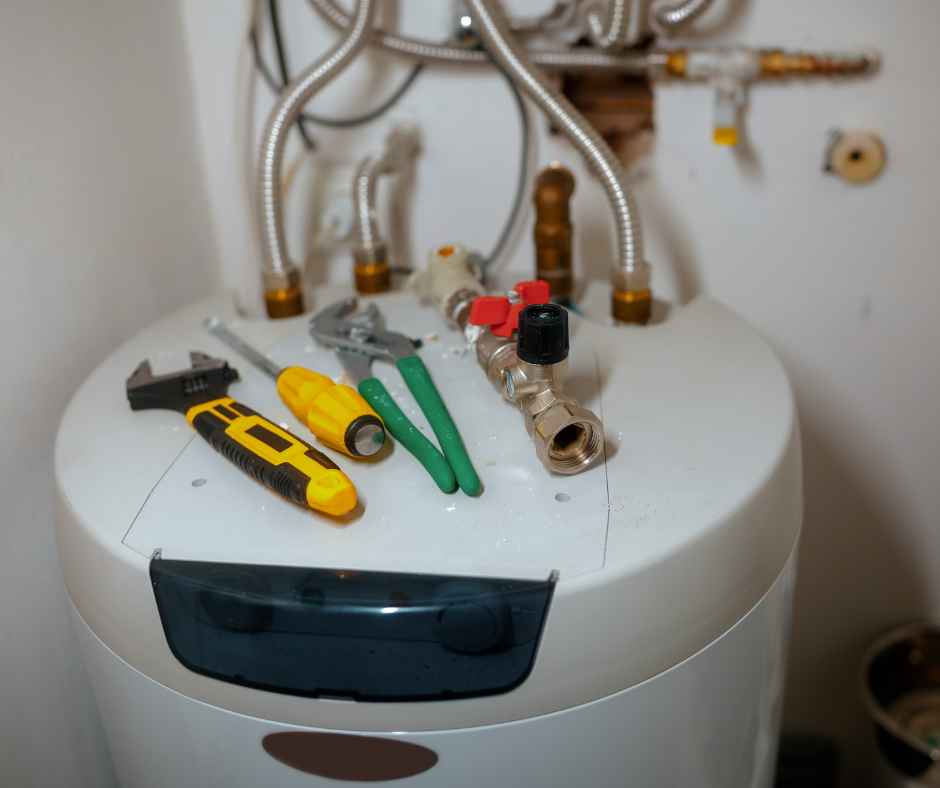
Living in Renton means dealing with a variety of household expenses, from rising property taxes to fluctuating utility rates. One of the most common sources of hidden financial drain is an aging or poorly maintained water heater. While it often sits out of sight in a garage or utility closet, a malfunctioning unit can quietly add hundreds of dollars to your annual expenses through wasted energy and water.
In this blog, we will help you determine whether your current system is still a reliable asset or has officially become a “money pit” that costs more to keep than to replace. Identifying the early warning signs of failure can save you from the stress of a sudden cold shower or a flooded basement.
Many Renton homeowners ignore their water heater as long as the water is hot, but “hot” does not necessarily mean “efficient.” As a unit ages, it loses its ability to retain heat, leading to a phenomenon known as standby heat loss. This means your heater is constantly running to maintain the temperature, even when no one is using water. In a region with high utility rates like King County, this constant cycling can lead to a significant spike in your monthly energy bills.
Internal mineral scale also forces the unit to run longer to heat the same volume of water. This inefficiency is a primary reason an old heater becomes a financial liability. To determine if your unit is draining your bank account, look for these specific indicators of rising costs:
Monitoring these performance metrics is a vital part of proactive plumbing maintenance. When these costs begin to compound, the “money pit” phase of your water heater’s life has likely begun.
Beyond the bills, your water heater often provides visual and auditory clues that it is reaching its breaking point. Identifying these physical symptoms early can prevent a catastrophic failure that could ruin your flooring or promote mold growth. Regular plumbing maintenance allows you to spot these red flags before they turn into a midnight emergency call.
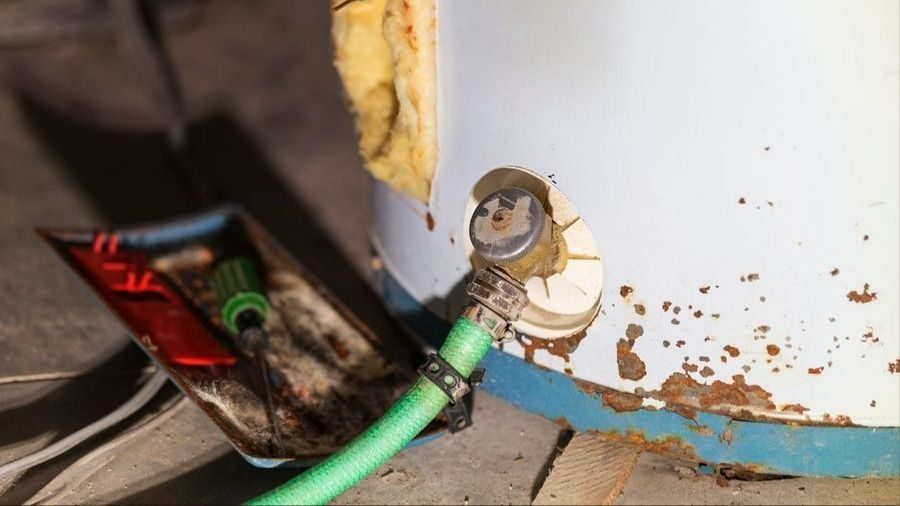
A deteriorating tank usually shows clear signs that its internal lining or components are failing. Keep an eye out for these specific physical warning signs during your next home inspection:
These physical defects are often signs of internal structural failure that cannot be easily repaired. Ignoring these warnings increases the risk of a tank burst, which can cause thousands of dollars in property damage.
In the Puget Sound region, a standard tank-style water heater generally has a reliable service life of eight to twelve years. Once a unit crosses the decade mark, the statistical likelihood of a major tank failure or a significant leak increases dramatically. For Renton homeowners, the decision to repair an aging unit often results in “throwing good money after bad,” especially as newer technologies offer vastly superior energy performance.
As of 2026, new federal efficiency standards have pushed manufacturers toward condensing and heat pump technologies. When considering whether to fix an old unit, evaluating these age-related factors is a core part of effective plumbing maintenance:
Choosing to replace a unit before it fails allows you to shop for the best efficiency ratings rather than making a rushed decision during an emergency. Investing in modern technology today prevents your utility room from becoming a permanent drain on your finances.
You do not need to be a professional plumber to perform a basic health check on your water heater. Taking twenty minutes to inspect your unit can reveal whether it is operating at peak efficiency or struggling to keep up. These simple DIY diagnostic steps are a foundational part of plumbing maintenance that every Renton resident should perform twice a year.
By checking the visible components and testing the water quality, you can gather the data needed to make an informed decision about your appliance. Use these steps to conduct your home audit:
Identifying these issues early allows you to schedule a professional flush or repair before the system becomes a total loss. These small steps are your best defense against the “money pit” cycle.
While home checks are vital, some inefficiencies are invisible to the naked eye. A professional audit from The Plumbing Joint uses specialized tools such as thermal imaging cameras to identify internal insulation gaps and ultrasonic meters to measure precise energy draw. We provide a clear cost-benefit analysis that compares your current repair costs against the long-term savings of a modern upgrade.
In Renton, where local water can vary in mineral content, a professional evaluation ensures your system is properly calibrated for your specific neighborhood. A professional diagnostic visit includes:
Don’t let an aging water heater dictate your monthly budget. By recognizing the signs of inefficiency and performing regular plumbing maintenance, you can keep your Renton home running smoothly.
The Plumbing Joint is dedicated to providing honest diagnostics and efficient solutions for every household. If you suspect your water heater has become a money pit, contact us today for a professional inspection and take the first step toward lower utility bills.
Depending on the age of your current unit, upgrading to a high-efficiency heat pump or tankless model can save you between 30% and 50% on your water heating costs annually.
This is usually caused by sediment at the bottom of the tank. As water beneath the sediment boils, it creates bubbles that “pop” as they escape, a sign of significant inefficiency.
Generally, no. The cost of a major repair on a decade-old unit often equals about half the cost of a new, warrantied system that will be significantly more efficient.
While timers can help with older electric models, modern units are already well-insulated. The best way to save is by ensuring the tank is flushed and the temperature is set to 120°F.
The Home Energy Assessment and Retrofit (HEAR) program provides significant rebates for Renton homeowners who switch from traditional electric or gas heaters to high-efficiency heat pump models.