Serving Renton, Seattle
the East Side & Beyond!
the East Side & Beyond!

Reliable hot water is easy to take for granted until showers turn cold, water temperatures fluctuate, or the supply runs out much faster than usual. When that happens, Renton homeowners may wonder whether the problem can be repaired or whether the water heater is nearing the end of its useful life.
Some problems involve a single replaceable component. Others point to corrosion, tank failure, poor sizing, or an aging system that may continue breaking down even after another repair.
In this guide, we will explain what unreliable hot water can mean, when water heater repair may make sense, and when replacement may offer better long-term value.
Water heater trouble does not always begin with a complete loss of hot water. Many systems decline gradually.
Common warning signs include:
Water that never becomes fully hot
Sudden temperature changes during use
Hot water that runs out quickly
Slow recovery between showers
Intermittent hot water
Unusual noises from the tank
Rust-colored or cloudy hot water
Moisture around the unit
Rising energy bills
The pattern of the problem can help identify the cause. A complete loss of hot water may point to a failed heating element, ignition problem, thermostat issue, or power interruption. A shrinking hot water supply may be caused by sediment buildup, a damaged dip tube, or a system that is too small for the household.
Traditional tank water heaters contain several parts that can wear out or malfunction.
Possible causes include:
Failed electric heating elements
Faulty thermostats
Gas burner or ignition problems
Sediment inside the tank
A damaged dip tube
Worn temperature and pressure relief valves
Loose plumbing connections
Electrical problems
Gas control valve issues
Tank corrosion
The right repair depends on the system type and the exact failure. Electric and gas water heaters operate differently, so a professional diagnosis is important.
Homeowners should not attempt to work on gas valves, electrical components, or safety devices without proper training. Water heaters combine electricity or fuel, high temperatures, and pressurized water, which can create serious hazards.
Minerals and debris can settle at the bottom of a tank over time. This layer of sediment may separate the heating source from the water and reduce the unit’s ability to heat efficiently.
Sediment buildup can cause:
Popping or rumbling sounds
Longer heating times
Reduced hot water capacity
Higher energy use
Uneven temperatures
Premature tank wear
In gas water heaters, trapped water may boil beneath the sediment and create popping noises. In electric units, buildup can contribute to heating element problems.
Routine maintenance may help reduce accumulation, but flushing is not always appropriate for every older tank. If the unit is heavily corroded or has not been maintained for many years, disturbing the sediment may expose existing weak points. A plumber can evaluate the condition before recommending service.
Repair may be a reasonable choice when the system is in otherwise good condition and the failure involves an isolated component.
Examples include:
A faulty thermostat
One failed heating element
A repairable ignition issue
A damaged external valve
A loose plumbing connection
A clogged burner assembly
A minor electrical problem
A broken dip tube
Repair may make the most sense when the unit is relatively young, has not needed frequent service, and shows no signs of tank corrosion or leakage.
Warranty coverage also matters. A part or labor warranty may reduce the cost of restoring the system.
The plumber should still inspect the entire water heater. Replacing one failed component does not provide much value if the tank is already corroded or another major part is close to failing.
A water heater can often be repaired, but that does not always mean repair is the best financial decision.
Replacement may deserve consideration when:
The unit is approaching the end of its expected service life
The tank itself is leaking
Corrosion is visible
Repairs are becoming frequent
Hot water capacity continues to decline
The system is inefficient
Major components have failed
Replacement parts are difficult to find
The unit is too small for current household demand
A lower-cost repair may extend the life of the system, but homeowners should consider how long that repair is likely to last. Spending repeatedly on an unreliable unit can eventually cost more than planning a replacement.
Age is not the only factor, but it changes the value of a repair.
As a water heater gets older, internal corrosion and component wear become more likely. Even if one part can be replaced, the tank, valves, burner, wiring, or heating elements may also be deteriorating.
An older unit may have:
Reduced efficiency
Heavy sediment buildup
Corroded fittings
Worn internal components
Limited warranty coverage
A greater risk of tank leakage
A plumber can look at the manufacturing date, service history, tank condition, and current failure to help estimate whether the unit still has useful life remaining.
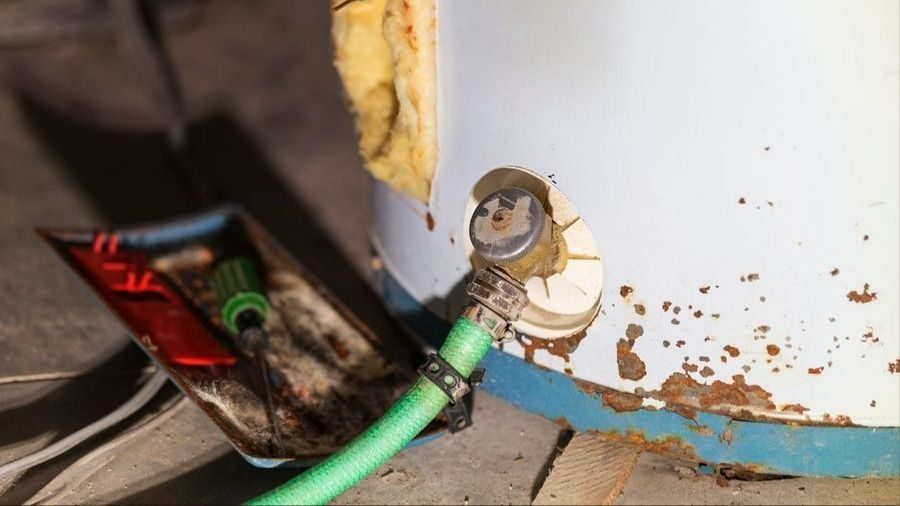
The tank is the central component of a traditional water heater. Once the tank itself begins leaking because of internal corrosion, replacement is usually required.
Signs of tank deterioration may include:
Water around the base
Rust near seams or fittings
Rust-colored hot water
Repeated dripping
Popping or cracking sounds
Visible corrosion on the tank
Reduced hot water volume
A metallic smell or taste
Not every leak means the tank has failed. Water may come from a valve, pipe connection, drain valve, or nearby plumbing fixture.
However, water around the base should always be investigated quickly. A small leak can worsen and damage floors, walls, cabinets, or nearby belongings.
The source of the leak determines whether repair is possible.
Repairable leaks may come from:
Loose pipe connections
A worn drain valve
A leaking relief valve
Corroded external fittings
Condensation around a gas water heater
A leaking tank is different. Internal tank corrosion generally cannot be patched reliably because pressure and heat continue stressing the damaged metal.
Turn off the water supply and energy source if the leak is active and safe access is available. For gas or electrical concerns, call a plumber promptly rather than attempting a repair.
There is no single repair-versus-replacement formula that works for every home.
Consider:
System age
Repair cost
Repair history
Warranty coverage
Tank condition
Energy efficiency
Hot water capacity
Expected remaining life
Likelihood of another failure
Household comfort needs
A modest repair on a dependable system may be worthwhile. A major repair on an old, inefficient, or corroded unit may provide limited value.
Ask the plumber whether the failure is isolated or part of broader deterioration. That distinction can make the decision clearer.
Sometimes the water heater is working correctly but no longer matches the household’s needs.
Hot water demand may increase because of:
More people living in the home
Additional bathrooms
Back-to-back showers
A larger bathtub
High-flow shower fixtures
Frequent laundry and dishwasher use
Overlapping morning routines
A tank that once worked well may now run out before everyone has finished using hot water.
Replacing a failed component will not solve a capacity problem. A plumber can evaluate the household’s peak demand and recommend a properly sized tank or tankless system.
Homeowners replacing an unreliable unit may choose between another tank water heater and a tankless system.
Traditional tank systems:
Store heated water for immediate use
Usually have a lower initial installation cost
Are familiar and widely available
Require space for the tank
Have a limited stored supply
Tankless systems:
Heat water as it is needed
Can provide extended hot water when properly sized
Use less storage space
May offer improved efficiency
Can require gas, venting, electrical, or plumbing upgrades
Tankless equipment is not automatically the right choice for every home. Installation requirements, fuel availability, household demand, water quality, and budget should all be considered.
A properly selected replacement may provide:
More dependable hot water
Faster recovery
Improved energy efficiency
Lower leak risk
Quieter operation
Updated safety controls
Better capacity for the household
New warranty coverage
Fewer unexpected repairs
Replacement also creates an opportunity to correct sizing problems, improve installation details, and choose equipment that better fits current routines.
Some water heater symptoms require prompt professional attention.
Call for service if you notice:
An active water leak
Water pooling around the tank
No hot water
A gas odor
Burning smells
Electrical buzzing or sparking
Water that is excessively hot
Rust-colored water
Loud banging or popping
Repeated system shutdowns
A tripped safety device
Gas odors and electrical problems should be treated as safety concerns. Leave the area and follow appropriate emergency guidance if you suspect a gas leak.
Before making a decision, ask:
What caused the current problem?
Is the tank itself in good condition?
How old is the unit?
Is the repair covered by warranty?
How long should the repair last?
Are other components showing wear?
Is the system properly sized?
Would replacement improve efficiency?
What tank and tankless options are available?
Will installation require other upgrades?
What warranties come with replacement?
A clear explanation of the diagnosis and options can help you choose based on long-term value rather than urgency alone.
Water heater repair may make sense when the problem involves a replaceable part and the rest of the system remains dependable. Replacement may be the better choice when the tank is leaking, the unit is aging, repairs are becoming frequent, or the system no longer meets the household’s hot water needs.
The Plumbing Joint can inspect your water heater, identify the cause of unreliable performance, and explain whether repair or replacement offers the better value. If your hot water is inconsistent, running out too quickly, or accompanied by leaks or unusual noises, contact us today to schedule service.